
Drug Charge Attorney Southwest Virginia: Counties We Serve
By The Letsen Law Firm
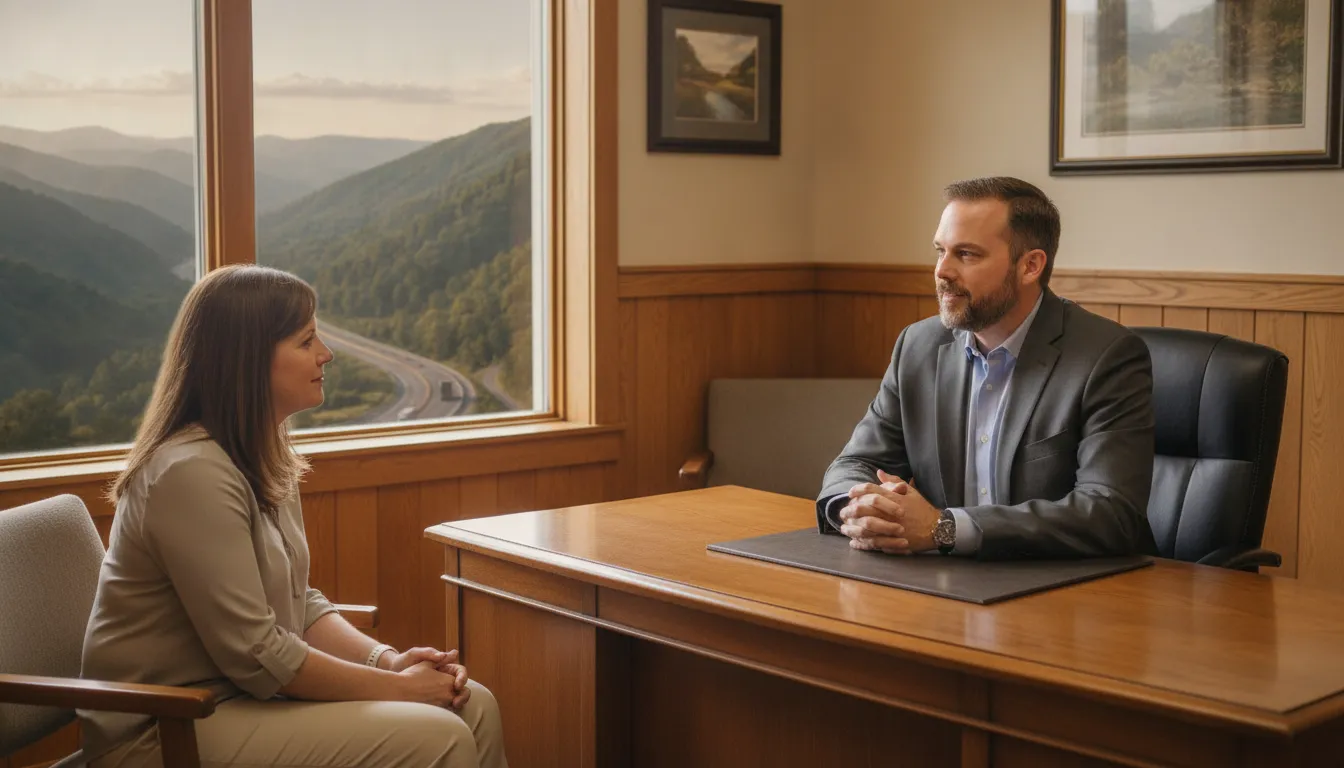
A drug charge can bring urgent questions, including whether an attorney serves the county where your case is pending. Letsen Law Firm is a Southwest Virginia solo practice with offices in Abingdon and Tazewell. Its stated service communities include Washington, Tazewell, Buchanan, Russell, and Smyth Counties, Bristol on the Virginia side, and Marion. The firm represents people accused of drug possession and distribution, without assuming an accusation tells the whole story.
When the search phrase is "drug charge attorney southwest virginia," the practical first question is whether the firm serves your community and court. Letsen Law Firm serves a regional footprint from two offices, but does not claim an office in every community. If you are unsure whether your location fits, ask the firm directly.
This guide focuses on service area and how to begin a conversation with counsel. It complements, rather than replaces, the firm's drug possession and distribution defense page, which covers the firm's work in those cases. If you have been charged, you can have your paperwork nearby and be ready to share the county, court date, and a brief timeline. A first conversation can help clarify whether your location is within the firm's stated service area and what information may be useful next. This is general information, not legal advice about any individual case.
Call to discuss your situation
Where Does a Drug Charge Attorney in Southwest Virginia Serve?
When a drug charge brings an unfamiliar court date or paperwork, knowing whether counsel serves your community is a practical first question. Letsen Law Firm is a Southwest Virginia solo practice led by Michael J. Letsen. Its two offices are in Abingdon and Tazewell, while its service area includes additional nearby communities. The office locations and the communities served are related. But they are not the same thing: the firm does not claim to have a separate office in every county it serves. Learn about the firm's drug possession and distribution defense for details about the matters it handles.
Office locations in Abingdon and Tazewell
The firm lists offices in Abingdon and Tazewell. Abingdon is in Washington County, and the Tazewell office is positioned to serve people in Tazewell and Buchanan Counties. Those are the firm's office locations, not a complete list of the places where someone may seek representation. If you are outside either town, you do not need to assume that distance alone answers whether the firm can help. The location of an office and whether the firm can take a particular case are different questions.
For directions, current contact details, or to ask about your situation, use the firm's Abingdon and Tazewell office information. You can explain which county or city is involved and ask directly whether your matter falls within the firm's service area. This is more useful than relying on a general label such as "Southwest Virginia," which can mean different things to different people.
Additional communities the firm serves
Letsen Law Firm identifies service communities in Washington, Tazewell, Buchanan, Russell, and Smyth Counties. Its listed service area also includes Bristol on the Virginia side and Marion. The firm's materials describe a regional practice, not an office in each of those counties or places. If you live in one of these communities, contact the firm to confirm that it can consider your case and discuss the relevant court and timing.
| Location. | Local connection. |
|---|---|
| Abingdon. | Office in Washington County. |
| Tazewell. | Office in Tazewell County. |
| Buchanan, Russell, and Smyth Counties. | Stated service communities. |
| Bristol, Virginia side, and Marion. | Stated service communities. |
If you are unsure whether your town is included, give the firm the town and county shown on your paperwork, if available. A charge may involve a court or location different from where you live. Sharing both can help clarify the question. Do not rely on an online map or assume that a nearby county is automatically covered. Ask the firm to confirm the service-area fit for the specific matter.
That check can also help you distinguish a location question from a legal one. Whether the firm serves a community does not determine what may happen in an individual case. A drug allegation deserves a careful, case-specific conversation, without assumptions about guilt or outcome. Letsen Law Firm describes its practice as serving people across Southwest Virginia, with the two offices in Abingdon and Tazewell and the additional communities listed above. Confirming your location and court with the firm is the clearest way to find out whether it can discuss your circumstances.
What Should You Have Ready Before Calling?
You do not need to prepare a perfect file or have every answer before contacting a lawyer. A few accurate details can help make the first conversation more useful. If you do not know something, say that plainly rather than guessing.
- Keep the charge paperwork nearby. Gather any summons, warrant, citation, bond paperwork, or other notice you already have that relates to the accusation. Include pages that came with it, if any. The wording and case information on those papers may help identify what is being addressed. Do not write on, alter, or discard the paperwork. If you do not have copies, mention that instead of delaying your call.
- Write down the court, county, and date shown. Note the court name and county printed on the paperwork, plus each hearing, appearance, or response date you see. If the location or date is unclear, copy the wording as it appears and flag your uncertainty. Do not assume two different dates mean the same thing. Sharing what is printed helps counsel understand the timing and identify what needs clarification.
- Make a short timeline in your own words. List the approximate date, time, and place of the events as you remember them, then note what happened before and afterward. Include when you first learned of the accusation and any contact you recall with law enforcement or the court. Keep it brief and separate what you personally saw or heard from what another person told you. It is useful to mark an estimate as an estimate and to say when your memory is uncertain. You do not need to decide what details are legally important.
- Note documents or other materials you already know about. Make a simple list of relevant items in your possession, such as messages, photographs, receipts, or additional case papers. You do not need to search devices, gather new material, or try to interpret it before speaking with counsel. Do not alter, delete, hide, or destroy anything. If you have a question about handling or sharing an item, mention it and ask the lawyer how to proceed.
- Write down names of people who may have relevant information. If you know someone was present or may have seen or heard something, note their name and, if readily available, a way to identify or contact them. Add only a brief reminder of what you understand they observed. Do not ask anyone to change, coordinate, or rehearse an account, and do not coach a witness. If you are unsure what a person knows, make that clear.
- Prepare the questions you want answered. You might ask what paperwork would help with a review, how to provide it securely, and what the next communication or step may be. Include questions about the court information or dates on your notice, and raise any immediate concern directly. This helps you leave the conversation with a clearer understanding of what remains unknown. The lawyer will need to consider the specific charge and circumstances before discussing your situation.
Letsen Law Firm's contact page provides a way to reach the firm. An honest summary of what you know, what you have, and what you are unsure about is enough to start a conversation.
How Can Local Counsel Help You Understand a Drug Charge?
A charge or summons uses legal language, but it is not a complete account of what happened or proof of an allegation. A first case-specific review can help identify what the paperwork actually says. What court is handling the matter, and what questions need answers before anyone can assess the situation. The purpose is to explain what is known and what remains uncertain, not to promise how a case will end.
The exact charge and court location matter because they help frame which deadlines, court dates, and procedures should be confirmed. An attorney can review the available paperwork with you and clarify whether it describes possession, an allegation involving distribution, or something else. If a document is unclear or appears incomplete, counsel can identify what information may be needed to understand it. The charge alone does not answer every question about the events or evidence.
A review may also help you understand what records exist or may need to be sought, such as reports, test results, or other materials referenced in the paperwork. The appropriate questions depend on the case. For example, an attorney may need to learn what the state says connects a person to a substance. How the substance was identified, and what information supports the accusation. That does not mean any particular record exists, is available, or will change the case. It is a way to separate documented facts from assumptions and unanswered questions.
Virginia Code section 18.2-250 states that owning or occupying a place or vehicle where a controlled substance is found does not. By itself, create a presumption of knowing or intentional possession. The statute is one part of the legal context, not a decision about any individual case. Whether a rule matters depends on the allegation and the specific facts. Read Virginia Code section 18.2-250.
Call Letsen Law Firm to discuss your situation
Michael J. Letsen is a former Buchanan County prosecutor. His experience can inform how he examines an accusation and considers the state's approach, but it does not guarantee a result. The useful question is not whether a lawyer can predict an outcome from a brief description. It is whether the available information can be reviewed carefully and explained honestly, including the limits of what is known at that point.
Letsen Law Firm represents people facing drug possession and distribution accusations. Its drug possession and distribution defense page provides an overview of that work. A separate article explains more about Virginia drug-possession charges. Those resources offer general information, while a review of a particular matter depends on its own documents and circumstances.
Not every uncertainty can be resolved in an initial conversation. Some details may require additional records or a closer review, and the available information may change as the case proceeds. A careful discussion can still help distinguish the allegation from established facts, clarify what needs follow-up, and give you a clearer understanding of the questions ahead. This article is general information, not legal advice for a specific case.
What Does a First Conversation Usually Clarify?
After a drug charge, it is common to have more questions than answers. An initial conversation is a chance to explain what you understand, learn what information matters, and identify questions needing closer review. You do not need a complete account or the right legal terms. The point is to begin a clear exchange, not decide the case on the spot.
The discussion may first sort out practical matters: where the case is pending. What the paperwork says, whether a court date is listed, and what deadline or instruction is causing concern. If you do not know the court or cannot tell what a document means, say so. A lawyer can help identify what needs clarification and whether additional documents should be reviewed. If a date is coming up soon, raise that promptly so its timing is understood.
It can also help distinguish the question you need answered now from questions that depend on more information. You may want to know what a particular charge means, what to expect at an upcoming appearance, or whether the firm may be able to represent you. Those questions can be triaged, but a reliable answer may require reviewing the actual paperwork and learning more about the circumstances. Letsen Law Firm represents people accused of drug possession and distribution; its drug possession and distribution defense page describes that work.
Be direct about what you remember and what you do not. Label uncertain details rather than filling in gaps, and mention missing or confusing documents. A responsible conversation separates known information from unanswered questions and explains what is needed for a more specific assessment. You can ask about the next step and how communication would work if you seek representation.
A call does not itself change a court date, excuse an appearance, or modify an instruction from the court. Do not assume a deadline has moved unless you receive reliable confirmation through the proper channel. When timing is unclear, identify the date or notice and ask how to verify what is required. Letsen Law Firm's contact page describes listening to a person's circumstances, reviewing them, and explaining case-dependent options in plain language. The details of any advice depend on the individual matter, and no outcome can be responsibly promised from a brief first exchange.
From Abingdon, Tazewell, or elsewhere in Southwest Virginia, start with the question causing you the most concern. The exchange can establish what is known, what remains to be checked, and a sensible next step, without judgment about the accusation.
Call Letsen Law Firm to discuss your situation
Can a Local Drug Case Be Dismissed or Can Anyone Predict Its Sentence?
No general answer can tell you whether a drug case will be dismissed or what sentence a person might receive. An accusation is not the same as proof, and a charge alone does not reveal everything that happened or what the available evidence may show. The outcome of an individual case depends on its particular facts, the exact charge, the evidence, the procedural history, and the law that applies at the time. A county or town name cannot supply that missing information, and no responsible lawyer can guarantee a result before reviewing the case.
Virginia Code section 18.2-250 addresses knowing or intentional possession of a controlled substance. The statute says that owning or occupying a place or vehicle where a substance is found does not by itself create a presumption of knowing or intentional possession. This narrow rule does not decide an individual case or establish that a case will be dismissed. The full circumstances and current law matter. Read Virginia Code section 18.2-250.
Whether a case can be dismissed cannot be determined from the charge's label alone. A lawyer needs to understand what is alleged, what the record contains, and what remains uncertain or disputed. Two people facing charges described in similar terms may have materially different circumstances. Documents may not tell the whole story, and an early account may leave important details unresolved. Without reviewing the available information and applicable law, it would be misleading to say dismissal is likely, impossible, or available through a particular action.
It is also important to separate a possible challenge to a charge from a prediction about a sentence. Those are different questions. Even where someone wants to understand potential consequences, a general online range or another person's experience cannot predict what will happen in a specific case. The law applicable to the precise allegation matters, and legal rules can change. Information written for a different charge, set of facts, or point in time may not apply. This is why a headline, search result, or informal estimate should not be treated as a reliable forecast.
A careful conversation with counsel is more useful than a promised answer. A lawyer can review the charge paperwork and information available at that stage, explain what is established and what is not, and discuss questions that need further attention. You can help make that discussion concrete by sharing relevant documents, the court information you have, and a candid account of events. If something is unclear or you do not know an answer, say so rather than guessing. The review may identify questions to explore, but it cannot honestly guarantee how a court will resolve the case.
If you or someone close to you has been charged, it is understandable to want certainty quickly. Case-specific legal advice requires a review of the actual circumstances and current law. This article provides general information only and is not legal advice or a prediction about any case.
Contact Letsen Law Firm to discuss your case
Frequently Asked Questions
Which Southwest Virginia communities does Letsen Law Firm serve?
Letsen Law Firm serves people in Washington, Tazewell, Buchanan, Russell, and Smyth Counties, as well as Bristol on the Virginia side and Marion. Its offices are in Abingdon and Tazewell, serving communities beyond those two towns. If you are unsure whether your location is within the service area, contact the firm to ask.
What information should I have ready when I contact a lawyer?
If you can, gather any charge or summons paperwork and note the county, court, and date listed. A short timeline of what happened and names of relevant witnesses or documents may also help explain the situation. Do not worry if you do not have every detail; be clear about what you know and what remains uncertain.
Can a lawyer predict what will happen in my drug case?
No one can reliably promise an outcome from a short description alone. The charge, available evidence, and details of the individual case all matter. A lawyer can review the information you provide, explain issues that may need closer attention, and discuss possible next steps without guaranteeing a particular result.
Do I need to live near an Abingdon or Tazewell office?
Not necessarily. The firm identifies service communities across Southwest Virginia, not only the towns where its offices are located. Whether Letsen Law Firm can assist with a particular case may depend on its location and circumstances. So share the county and court information when you contact the firm to confirm.
Contact Letsen Law Firm About Your Next Step
If you are looking for drug charge defense in Southwest Virginia, a direct conversation can help you share the basic details of your situation. It can also help you ask what next steps may be appropriate. You do not have to sort through every question before reaching out.
Discuss your county, court information, and the questions you still have. The firm can explain what additional information may be needed before discussing your specific circumstances.