
Sex Crime Defense Lawyer: What to Know in Virginia
By The Letsen Law Firm
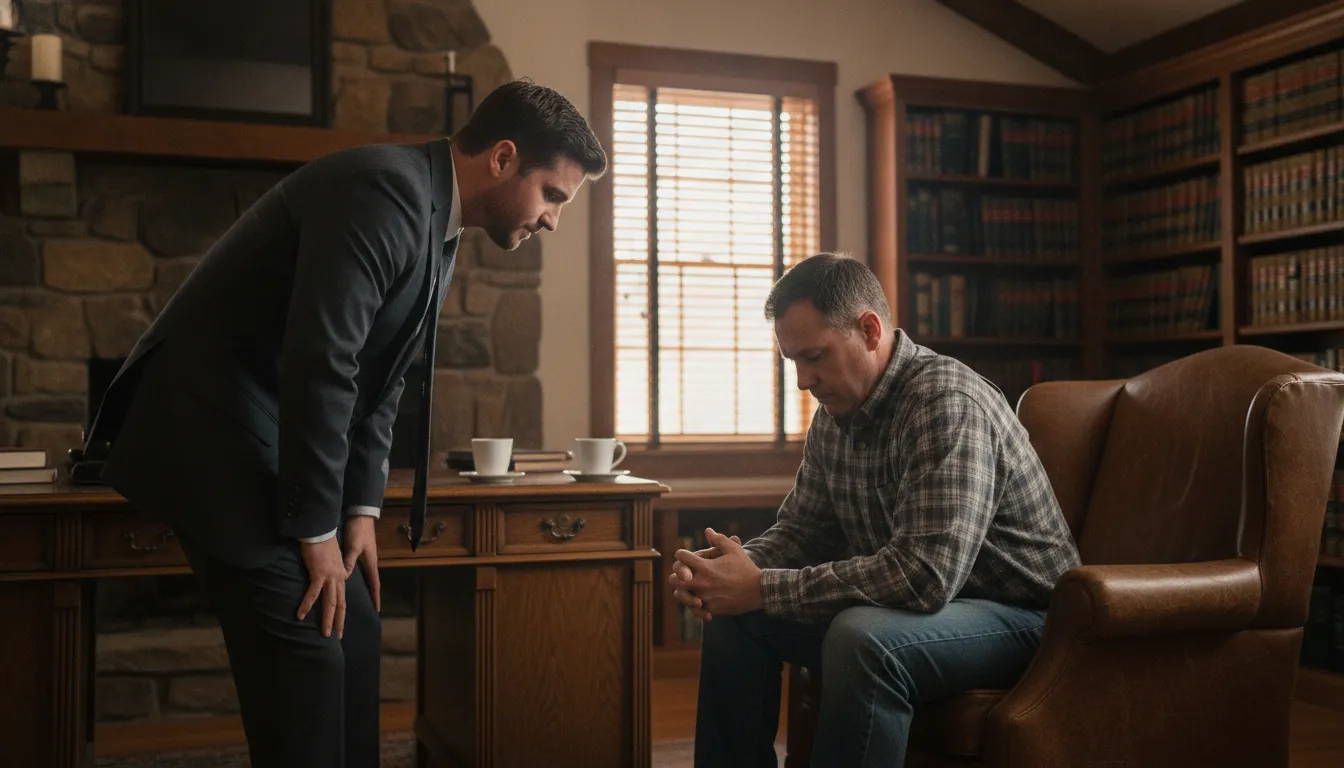
Sex Crime Defense Lawyer: What to Know in Virginia
When a Virginia sexual offense allegation arises, the situation can change quickly. An accusation is not a conviction, but the potential consequences are serious, and early decisions about communication, evidence, and legal advice can matter. You do not have to face the process alone or discuss sensitive facts publicly.
A sex crime defense lawyer can explain the specific statute involved and protect your rights during an investigation or prosecution. Counsel can help you respond carefully while the facts are reviewed. Virginia law provides severe penalties for offenses such as rape and aggravated sexual battery. Certain convictions can also trigger registry requirements. See Article 7 of the Code of Virginia and the registry provisions for the governing statutes.
Choosing counsel is not only about courtroom experience. It is also about discretion, honest analysis, and a clear understanding of how Virginia prosecutors build these cases. Those considerations deserve careful attention from the beginning.
Why a Sex Crime Defense Lawyer Matters After a Virginia Charge
An investigation is not a conviction, and an accusation does not establish that a crime occurred. Still, contact with law enforcement or notice of a criminal allegation should be treated seriously. Early conversations with a sex crime defense lawyer can help protect your legal interests while the facts and applicable law are reviewed carefully. If alcohol is part of the allegation, the firm's related discussion of consent, alcohol, and sex crime charges explains why context and evidence need careful review.
Virginia law provides for severe consequences for some sexual offenses. For example, Virginia's rape statute states that rape is punishable by imprisonment for life or for any term of at least five years. Read the statute at Virginia Code Section 18.2-61. Aggravated sexual battery is classified as a Class 2 felony, with a statutory punishment of at least 20 years and up to life imprisonment under Virginia Code Section 18.2-67.3. Those provisions illustrate why a person should not rely on assumptions about how a case will be handled.
The specific statute matters
Virginia's sexual assault offenses appear in Article 7 of Title 18.2, Chapter 4. The elements of an offense, the required proof, and the legal significance of the alleged conduct depend on the particular statute charged. Article 7 can be reviewed through the Code of Virginia. A careful defense analysis starts with identifying the precise allegation and comparing it with each required legal element. Broad labels or conclusions made before that review can obscure issues that may matter to the case.
Conviction consequences can extend beyond the sentence
For certain convictions, Virginia's Sex Offender and Crimes Against Minors Registry Act mandates registration of an individual's presence and information. The requirements depend on the offense and the governing law. The registry provisions are available in Title 9.1, Chapter 9 of the Code of Virginia. Because registration can create ongoing legal and personal consequences, it should be considered as part of the statute-specific analysis, not treated as an afterthought.
These cases also call for disciplined communication. Avoid discussing the allegations publicly or sharing detailed statements online. Do not assume that an informal conversation is harmless. A lawyer can help you understand what is happening, what information must be preserved, and how to respond lawfully without making premature statements. Prompt, careful advice is not a declaration of guilt. It is a practical step toward understanding the allegation and protecting the fairness of the process.
What Should You Look for in a Sex Crime Defense Lawyer?
Choosing a sex crime defense lawyer is not only about finding someone who handles criminal cases. These matters often involve sensitive allegations, complicated evidence, and serious personal consequences. You need counsel who will listen carefully, explain what is known and what remains uncertain, and give you a clear plan without treating an accusation as a conviction.
Ask specific questions during an initial conversation. Has the lawyer handled sensitive criminal cases? Who will communicate with you and make decisions about your case? How familiar is the lawyer with the courts and procedures in the area where the matter is pending? A direct relationship can make it easier to share difficult information and respond quickly when circumstances change. In Southwest Virginia, local court familiarity may also help counsel understand the practical setting in which your case will proceed.
| Practical criterion | Question to ask |
|---|---|
| Experience with sensitive cases | What experience do you have handling criminal matters involving sensitive allegations and detailed evidence? |
| Communication | Who will be my primary contact, and how will you explain important developments? |
| Local knowledge | How familiar are you with the court, procedures, and legal professionals involved in this area? |
| Discretion | How do you protect private case information and limit unnecessary discussion of the allegations? |
| Honest analysis | What facts could help or hurt my position, and what information do you still need? |
| Case assessment | What can you explain about the process, and what outcomes cannot responsibly be predicted? |
Good counsel should be willing to discuss difficult facts without judgment. That includes identifying weaknesses as well as strengths, explaining the legal issues that matter, and distinguishing an investigation from a formal charge. A lawyer should not promise dismissal, acquittal, or any other specific result. The facts, evidence, legal elements, and decisions of prosecutors and courts all affect how a case develops.
Letsen Law Firm provides personal representation rather than routing every decision through a large office. If you are looking for sex crime defense representation, look for honest legal analysis, reliable communication, discretion, and compassionate guidance from the person actually handling your defense. You can also review the firm's criminal defense practice, its attorney background, and contact information before deciding what to do next.
How a Former Prosecutor Can Read the Commonwealth's Case
When a person is accused of a sex offense, the case can feel confusing and overwhelming. A defense lawyer must do more than repeat the allegation or react to the most alarming detail. Counsel needs to examine how the Commonwealth may describe the events, what evidence supports that theory, and whether the evidence proves every required element beyond a reasonable doubt.
Understanding the prosecution's theory
A former prosecutor has firsthand experience with the decisions that shape a criminal case. That perspective can help counsel ask practical questions early: What facts is the Commonwealth likely to emphasize? Which statements, records, or witness accounts may be used to support the charge? Are there gaps between the allegation and the evidence? Has the investigation addressed facts that could point in another direction?
This does not mean a former prosecutor has access to confidential government information, special treatment, or an inside path to a particular outcome. It means the lawyer may be better positioned to recognize how prosecutors evaluate proof, anticipate common arguments, and test whether the state's theory is supported by admissible evidence. A Virginia legislative review explains that defense counsel who have served as prosecutors can possess unique insight into the tactics and burdens of proof used by the Commonwealth: Virginia legislative review.
Testing evidence against the legal standard
Sexual assault offenses are defined by specific Virginia statutes, and the details matter. The lawyer should compare the alleged conduct with the precise elements of the charged offense, then evaluate the reliability and legal use of the evidence. That review may include statements, timelines, communications, physical evidence, witness accounts, and the circumstances in which information was collected. It should also consider whether important facts are disputed or whether the available proof leaves reasonable questions.
Michael J. Letsen brings a verified former Buchanan County Commonwealth Attorney background to this work, along with more than 17 years of experience as an attorney. His former prosecutor background is one part of the experience he uses to provide direct, honest legal analysis for people facing sensitive accusations in Southwest Virginia.
Put My Experience On Your Side
Preparing for the next decision
Careful case analysis can guide preparation for negotiations, motions, or trial. It can also help a client understand the strengths and weaknesses of the available options instead of relying on promises. No former prosecutor, or any other sex crime defense lawyer, can guarantee a result. The responsible approach is to investigate thoroughly, explain the risks clearly, protect the client's rights, and make decisions based on the actual evidence and applicable law.
What to Do After an Accusation or Police Contact
An accusation or police contact can make it difficult to think clearly. Try to slow the situation down and avoid decisions that could create additional problems. An accusation is not a conviction, but statements, messages, and reactions may become part of an investigation. The safest next steps are practical and lawful.
- Stay calm and do not argue with investigators, an accuser, or anyone else. Be respectful, but do not try to explain everything informally in the moment. If an officer asks to speak with you, you can ask whether you are free to leave and state clearly that you want to speak with a lawyer before answering questions. Do not lie, guess, or offer a version of events simply because you feel pressured to respond.
- Do not consent to an informal interview without legal advice. You may be contacted by law enforcement, a school, an employer, a family member, or another person seeking information. Do not assume that a casual conversation is consequence-free. Tell the person you want legal counsel before discussing the allegation. A sex crime defense lawyer can help you understand what is being asked and how to respond lawfully. Counsel cannot promise to prevent an arrest or control every investigative decision.
- Preserve messages, records, and other evidence. Keep texts, emails, call logs, photos, social media messages, location records, and documents that may relate to the events. Do not delete, alter, hide, or destroy anything. Do not ask another person to change a message or coordinate a story. Make a private, accurate timeline for your lawyer while the details are fresh, and identify potential witnesses without coaching them.
- Do not discuss the accusation publicly. Avoid posting about it on social media or discussing the facts in group messages. Public comments can be misunderstood, circulated, or presented out of context. Ask friends and family not to post about your situation either. Protecting your privacy is not the same as concealing evidence. Preserve relevant information and share it with your lawyer.
- Do not contact the accuser or potential witnesses about the allegation. Even a message intended to apologize, clarify, or ask for privacy can be misunderstood and may escalate the situation. Do not threaten, pressure, bargain with, or encourage anyone to change an account. If there is a no-contact order or another court condition, follow it exactly. Questions about necessary communication should go to counsel.
- Call counsel promptly and be candid. Contact a lawyer who handles sensitive criminal matters, explain whether you have been contacted or served with paperwork, and provide the records you preserved. Tell your lawyer the facts as accurately as possible, including facts that concern you. Early advice can help you avoid preventable mistakes while the situation is still developing. If police are actively waiting to question you or you have been arrested, ask for counsel and do not resist lawful process.
These steps do not determine the outcome of an investigation or case. They help protect your ability to receive informed advice and respond responsibly. If you are in Southwest Virginia, Letsen Law Firm can review your situation and explain the next lawful step.

Why Local, Confidential Representation Matters in Southwest Virginia
A sensitive criminal allegation can affect your work, family, and peace of mind long before a case reaches a courtroom. Local representation gives you a lawyer who understands the communities involved and can communicate with you directly throughout the process. Just as important, you should be treated as a person facing a difficult situation, not reduced to an accusation. An allegation is not a conviction, and careful legal guidance should begin with listening and an honest assessment of what is known.
Letsen Law Firm is a solo practitioner practice led by Michael J. Letsen. That model means your relationship is centered on direct attorney-client communication rather than a large-firm structure with multiple layers between you and the lawyer responsible for your case. You can discuss concerns with the attorney handling the matter, ask questions as they arise, and receive clear explanations of legal issues and next steps. The goal is reliable representation and honest analysis, not false certainty or promises about an outcome.
Privacy also requires care in how information is shared. Attorney-client protections apply within their legal limits, but no lawyer can promise absolute confidentiality in every circumstance. Avoid discussing sensitive facts publicly or through channels that may not be secure. A careful conversation with counsel can help you understand what information matters, how to preserve relevant records, and how to communicate without creating unnecessary problems for your case.
Letsen Law Firm has offices in Abingdon and Tazewell and serves people throughout Southwest Virginia, including Bristol and communities in Washington, Tazewell, Smyth, Russell, and Buchanan counties. Local familiarity does not replace case preparation. But it can make it easier to understand the setting in which your matter will be addressed and to plan practical communication around your circumstances.
For someone looking for Southwest Virginia criminal defense representation, compassion matters as much as legal knowledge. Michael J. Letsen's former prosecutor background informs how he evaluates the Commonwealth's approach, while a non-judgmental manner keeps the focus on the facts, the law, and your rights. You deserve counsel who will be candid about uncertainty, protect your dignity, and give your case the individual attention it requires.
How Defense Counsel Builds a Case Without Assuming the Outcome
A careful defense review starts with the actual allegations, not with assumptions about what happened or how the case will end. An accusation is not a conviction. Counsel must understand the precise conduct alleged, the legal elements the Commonwealth must prove, and whether the available evidence addresses each element. Virginia's sexual assault offenses are set out in Article 7 of the Code of Virginia. Distinctions involving conduct, force, consent, and other circumstances can affect the legal analysis. Those details make statute-specific review essential.
Reconstructing what happened
The next step is often a detailed timeline. Counsel may compare the reported events with messages, call records, location information, and photographs. Social media, employment records, medical records, or other digital evidence may clarify sequence and context. This review is not about selecting only convenient information. It is about preserving potentially relevant evidence and testing whether the available record is consistent, incomplete, or disputed.
Statements also require careful examination. A defense lawyer may review what the client told investigators, what other witnesses reportedly said, and whether accounts changed over time. Witnesses can provide important context, but their availability, memory, perspective, and relationship to the people involved may all matter. Counsel should not assume that any witness will remember events perfectly or that a single inconsistency will decide the case.
Checking procedure as well as substance
A case review includes procedural questions when they are relevant. Counsel may examine how evidence was obtained, how interviews were conducted, whether required legal procedures were followed, and whether the charging document properly identifies the offense. The significance of any issue depends on the facts and governing law. A potential concern is not automatically a winning defense, and no responsible lawyer should promise that a particular argument will lead to dismissal or acquittal.
Throughout the process, communication with the client matters. The lawyer should explain what is known, what remains uncertain, what decisions require the client's input, and what next steps are available. Honest analysis may include difficult information, but it should never involve shame or premature conclusions. For someone facing a sensitive allegation, individualized review and reliable counsel provide a clearer basis for making informed decisions while the case develops.
Schedule Your Initial Case Consultation
Frequently Asked Questions
What should I do if I am accused of a sex crime?
Stay calm, avoid discussing the allegation publicly, and do not contact the accuser about the case. If police want to question you, politely ask to speak with a lawyer first. Preserve messages, records, and other relevant information without deleting or altering anything. Early legal advice can help you make careful decisions while the facts are still being developed.
Why does hiring a sex crime defense lawyer early matter?
Early counsel gives your lawyer a chance to learn the timeline and protect your rights during police contact. Counsel can also evaluate the allegation and available evidence before assumptions harden into a charging theory. Early advice helps you avoid preventable mistakes, such as informal statements or direct contact that could complicate the case.
How can a former prosecutor help with my defense?
A former prosecutor understands how the Commonwealth may organize evidence, assess credibility, and present its theory of a case. That perspective can help counsel review the allegations critically, identify questions that require investigation, and prepare for negotiation or trial. It does not guarantee a particular result, but it can inform a more complete defense strategy.
How much does a sex crime defense lawyer cost?
There is no responsible one-size-fits-all price. Fees depend on factors such as the allegations, expected complexity, court proceedings, evidence, and work required. A lawyer should explain how fees are handled and what representation includes during an initial discussion. Ask direct questions so you understand the arrangement before deciding whether to hire counsel.
Why is experienced counsel important in a Virginia sex crime case?
Virginia's sexual-assault offenses are defined in specific statutes, so the legal elements and potential consequences depend on the exact charge. Certain convictions can also trigger registration requirements under Virginia's registry law. A lawyer should analyze the statute, evidence, and circumstances rather than treating every allegation as the same. See the Virginia Code's sexual-assault provisions for the governing framework: Virginia Code Article 7 and the Virginia registry law.
Ready to Discuss Your Situation?
A sensitive accusation can raise immediate questions about privacy, communication, and what happens next. Speaking with counsel can help you understand the legal process and make informed decisions based on the specific facts of your situation. Letsen Law Firm provides direct, compassionate representation for people facing criminal allegations in Southwest Virginia.
Call Letsen Law Firm to discuss a sensitive criminal defense matter.