
Former Prosecutor Criminal Defense Attorney Virginia
By The Letsen Law Firm
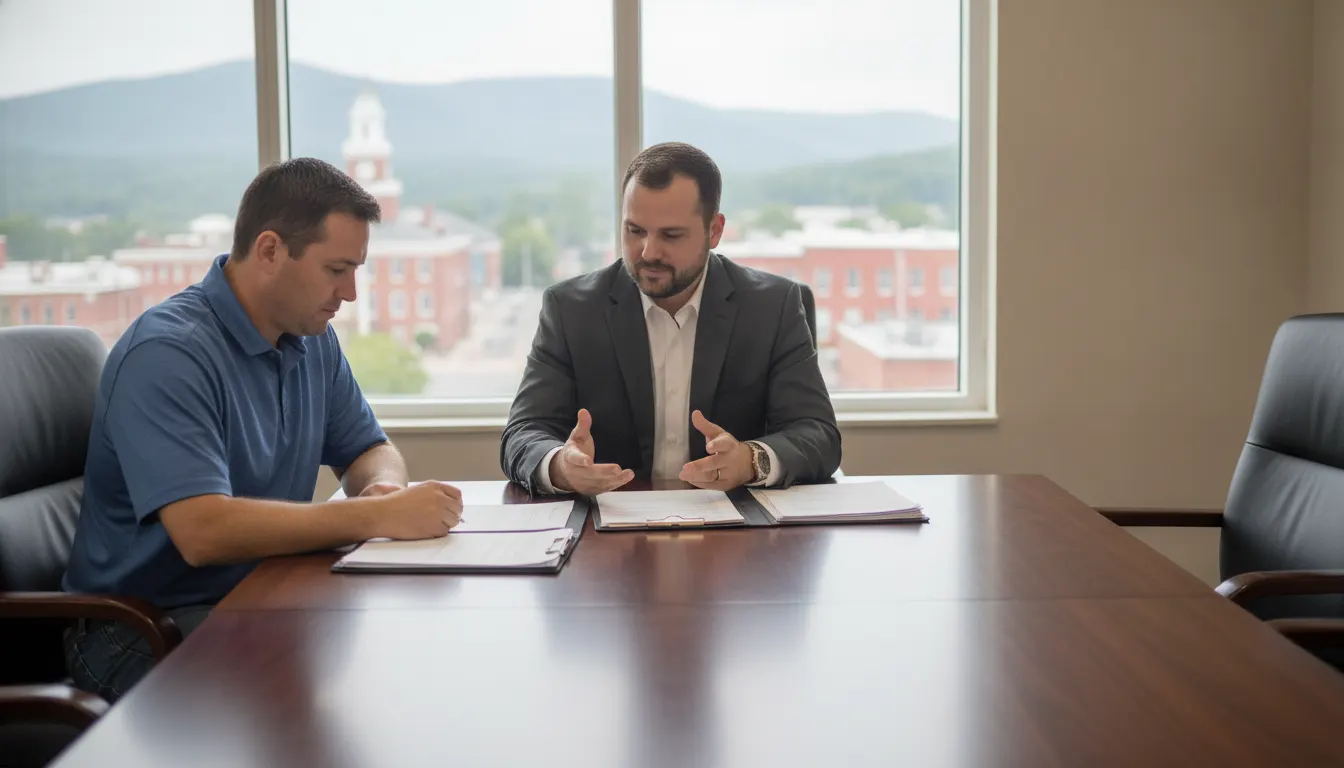
If you are looking for a former prosecutor criminal defense attorney in Virginia, you are probably asking a practical question: can that background make a difference when your freedom, license, job, or reputation is at risk? It can provide a useful second perspective on how the Commonwealth may evaluate a case, but it is not a shortcut or a promise of a particular result. The value comes from applying that perspective to the specific facts, evidence, and stage of your case.
Schedule Your Initial Case Consultation
Michael J. Letsen brings that prosecution-side experience to criminal defense representation in Southwest Virginia. Before representing people accused of crimes, he served in the Buchanan County Commonwealth Attorney's Office. Today, he uses that experience to ask focused questions about how a case may be viewed, where the evidence needs closer review, and what should happen next.
This article explains what former-prosecutor experience can and cannot do for a defense client. For a broader overview of the firm's approach and service area, read the complete guide to criminal defense in Virginia. This article focuses on one narrower issue: why prosecution-side experience may be an important factor when you evaluate counsel.
What a Prosecutor Knows That Defense Attorneys Often Miss
Every lawyer develops a perspective through training and practice. An attorney who has worked for a prosecutor's office has also seen how cases are screened, organized, presented, and negotiated from the government's side. That experience does not replace investigation or defense preparation, but it can help an attorney recognize the questions that need to be asked early.
How an accusation becomes a case theory
A police report, warrant, summons, indictment, or arrest does not tell the whole story. The state's theory may depend on how an officer's account is framed, which witness is treated as reliable, what facts are emphasized, and what facts are left unexplained. A former prosecutor has seen how a collection of details can be organized into an argument about what happened.
That perspective can make the first review more disciplined. Instead of considering only the charge name, counsel can ask what the Commonwealth would need to prove, which facts support each element, and whether the available evidence actually answers those questions. The purpose is not to assume the state's position is correct. It is to test that position before it becomes the only version of events being discussed.
How evidence is evaluated before trial
Prosecutors commonly review evidence in categories: statements, physical evidence, photographs, video, digital communications, medical records, laboratory information, and law-enforcement reports. The meaning of one item can change when it is compared with the timeline or with another witness's account.
A defense review should be just as careful. A former prosecutor may know which gaps or inconsistencies deserve attention because they affect the way a case can be proved. That does not mean every inconsistency wins a case. It means the defense is less likely to accept a report, assumption, or label without asking how it fits with the complete record.
How charging and negotiation decisions are made
Criminal cases can change as prosecutors receive more information, speak with witnesses, review records, and assess the strengths and weaknesses of the evidence. A lawyer with experience on the prosecution side may understand the practical questions that influence those discussions, such as whether a witness can be located, whether the evidence is admissible, and whether the facts support the charge being pursued.
That knowledge can help counsel prepare for negotiations without treating a plea discussion as automatic or inevitable. A responsible defense attorney should explain the available options, the known risks, and the unanswered questions. The decision remains the client's, after reviewing the facts and receiving case-specific legal advice.
How Michael Letsen Applies Prosecution Insight to Your Defense
Michael Letsen's former role with the Buchanan County Commonwealth Attorney's Office is part of his legal background, not a claim of special access to current prosecutors or guaranteed influence in a courtroom. Its practical value is the perspective he developed before moving to private criminal defense practice.
In a consultation, that perspective can shape the questions asked about your case. What paperwork did you receive? What court date or release condition applies? What did law enforcement say happened? Who was present? What messages, photographs, video, records, or other information may help establish the timeline? Has anyone asked you to explain the facts before you had legal advice?
These questions help separate known facts from assumptions. They also help identify what should be preserved and what should not be discussed casually. Early preparation is especially important when a person is worried, embarrassed, or unsure which details matter. A non-judgmental conversation gives counsel a better foundation for honest legal analysis.
Letsen Law Firm is a solo practice, so the attorney-client relationship is direct. That structure allows the initial case discussion to focus on the person's actual situation instead of treating the charge as a file number. You can learn more about Michael Letsen's background on the firm's About page.
A former prosecutor's perspective is one part of a defense strategy. It must still be combined with careful factual investigation, knowledge of current Virginia law, communication with the client, and preparation suited to the specific charge and court.
Put My Experience On Your Side
Why Local Court Knowledge Changes the Review in Southwest Virginia
Virginia criminal defense is not only about reading a statute. A case also moves through a particular court, with a particular procedural posture, set of documents, deadlines, and local context. The first questions in a General District Court matter may differ from those in a Circuit Court felony case. A preliminary hearing, arraignment, bond hearing, misdemeanor trial, and circuit-court proceeding each serve a different purpose.
For someone in Abingdon, Tazewell, Bristol, Marion, or a nearby county, local familiarity can make the process easier to understand. Letsen Law Firm serves communities across Southwest Virginia, including Washington County, Tazewell County, Smyth County, Russell County, Buchanan County, and the Virginia side of Bristol. The goal is not to suggest that every court or case works the same way. The goal is to recognize that representation should be grounded in the court and facts that actually apply. The firm's Southwest Virginia criminal-defense guide provides the broader service-area context, while this article stays focused on the former-prosecutor perspective.
The criminal defense service page explains how the firm begins with the exact charge, paperwork, current stage, and available evidence. For the broader relationship between the firm's service areas and its criminal-defense approach, see the complete Southwest Virginia criminal-defense guide before comparing your situation with a general example. Those details matter more than a generic promise. Official information about Virginia's court structure is available from the Virginia courts, but public information cannot replace advice about an individual case.
Reading the State's Evidence Before It Is Used Against You
A prosecution-side background can be especially useful when counsel organizes the evidence early. The review may include several separate questions.
- What is the source? Is the information from an officer, a civilian witness, a recording, a document, a device, or another source?
- What does it actually show? Evidence may support one narrow fact without proving the larger conclusion the state wants to draw.
- What is missing? Missing video, unclear timestamps, incomplete messages, unavailable witnesses, or unexplained gaps may affect how confidently a fact can be presented.
- Does the timeline make sense? Events should be compared across statements, records, photographs, calls, messages, and other available information.
- How was the evidence obtained? Depending on the facts, questions about a stop, search, seizure, statement, identification, or chain of custody may need legal analysis.
- What should be preserved now? Clients should keep relevant messages, photographs, videos, records, and court documents, and should avoid deleting or altering material that could matter.
This kind of review is not a promise that a charge will be dismissed. It is a way to avoid making decisions based only on fear or on the state's first description of the case. Virginia law and procedure can be technical, and the answer depends on the facts. The Code of Virginia is a public reference, not a substitute for confidential legal advice.
Choosing a Defense Attorney Who Has Been on the Other Side
Former-prosecutor experience can be meaningful, but it should be described honestly. It does not guarantee a dismissal, acquittal, reduced charge, favorable plea, or particular sentence. It does not create a special relationship with the prosecutor or judge assigned to your case. It does not make an attorney familiar with every possible defense, scientific issue, or legal development.
Good representation begins with a candid assessment. Ask whether the attorney handles the type of charge involved, who will personally work on the case, how evidence will be reviewed, how updates will be communicated, and what questions remain unanswered. You should also expect counsel to explain uncertainty instead of using confidence as a substitute for analysis.
For general guidance about evaluating counsel, you can read how to choose a Virginia criminal defense lawyer. The difference between that general selection guide and this article is the focus: a former prosecutor may bring a particular understanding of case-building and prosecution decision-making, but that background still has to be applied carefully to your facts.
Talk Through Your Case Before You Make Your Next Move
Questions About Former Prosecutor Experience
Does a former prosecutor make a better criminal defense attorney?
Former-prosecutor experience can provide useful insight into how criminal cases may be evaluated, charged, negotiated, and prepared. It is not the only factor that matters. The right fit also depends on the attorney's experience with the charge, knowledge of the relevant law and court, preparation style, communication, and ability to give candid advice.
Can a former prosecutor predict what will happen in my case?
No attorney can responsibly promise a result based only on a professional background. A former prosecutor may identify questions about evidence and procedure that deserve early attention, but the outcome depends on the facts, law, witnesses, court process, and decisions made throughout the case.
What should I bring to an initial criminal defense consultation?
Bring any warrant, summons, indictment, bond paperwork, protective order, release condition, court notice, police document, and other material you received. If available, preserve relevant messages, photographs, videos, records, and witness information. Do not delete or alter evidence, and avoid discussing the facts publicly or with people who do not need to know.
Does Letsen Law Firm serve only Buchanan County?
No. Letsen Law Firm has offices in Abingdon and Tazewell and serves people in communities across Southwest Virginia, including Washington County, Tazewell County, Bristol, Smyth County, Russell County, Buchanan County, and Marion. The correct service area and next step depend on your location, charge, court, and case stage.
Take the Next Step With Clear Legal Analysis
Facing a criminal accusation can make every decision feel urgent. A consultation cannot change the facts, but it can help you understand what the paperwork says, what questions need answers, and what choices may be available. Michael Letsen's experience as a former Buchanan County prosecutor gives him a perspective on how the state may build a case. His job on the defense side is to apply that perspective with honest analysis, careful preparation, and compassionate counsel.
Do not wait to preserve important information or to learn what your next court date requires. Contact Letsen Law Firm to discuss your situation confidentially.