
Personal Injury Attorney Southwest Virginia: Your Guide
By The Letsen Law Firm
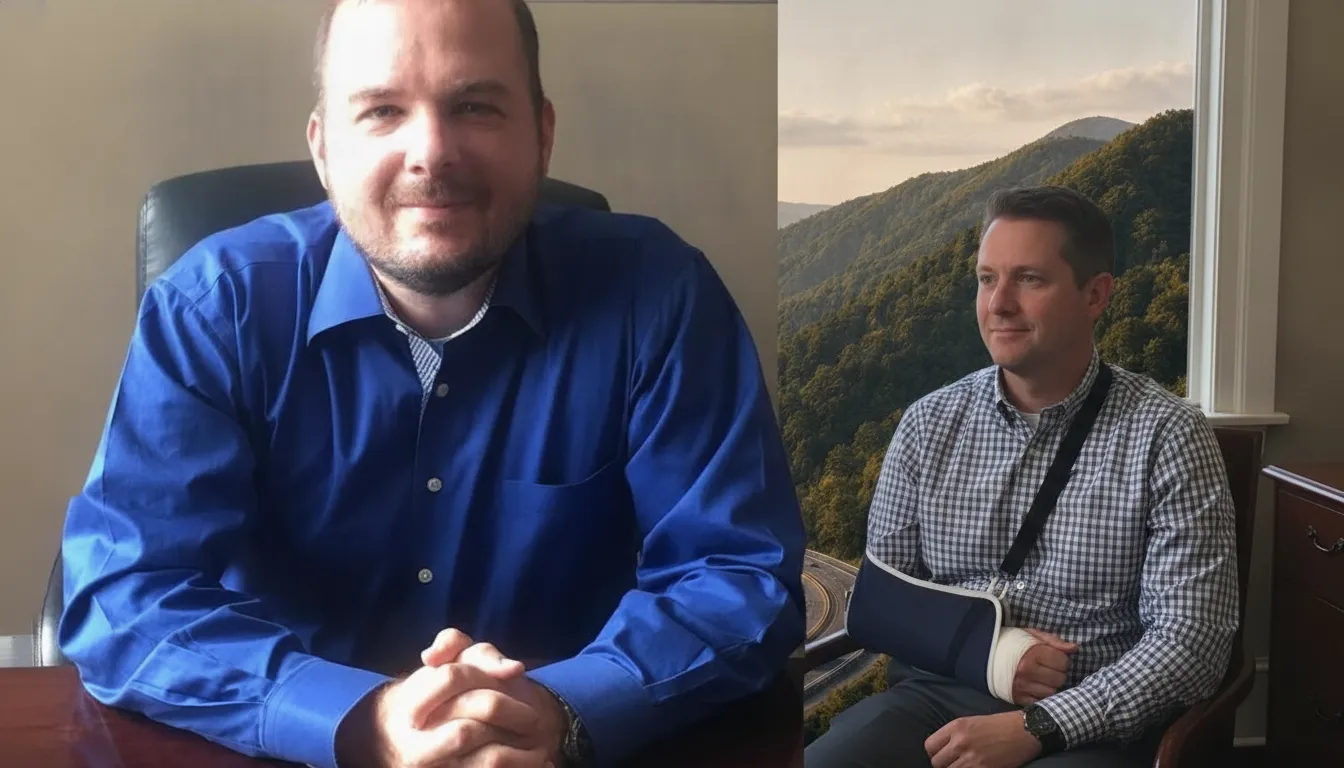
After a crash, the hardest part is often not the first phone call or medical visit. It is understanding what to do next while you are managing pain, missed work, insurance questions, and uncertainty about your rights. In Southwest Virginia, local guidance can help you protect important evidence and avoid decisions that may affect your claim.
Contact Letsen Law Firm to schedule an initial case consultation
If you searched for the phrase personal injury attorney southwest virginia, you likely want clear guidance from someone who understands local injury claims. A personal injury attorney serving Southwest Virginia can review what happened, explain your options, and communicate with insurers. Counsel can also help build a claim for injuries caused by a car accident, truck accident, or other covered event. The right approach depends on the facts, your medical documentation, and Virginia law.
Letsen Law Firm is a solo practice with offices in Abingdon and Tazewell, serving injured people throughout the region. The first step is understanding what legal help can actually do after an accident and how that process begins.
What Does a Personal Injury Attorney Do After an Accident?
After an accident, an attorney's role is to bring structure to a situation that may feel confusing and overwhelming. You may be dealing with pain, medical appointments, missed work, vehicle damage, and repeated calls from an insurance company. Counsel helps organize the facts, protect your interests, and explain the decisions that may affect your claim.
The first step is usually a careful review of what happened. That can include discussing the accident, the injuries, treatment received, employment impact, insurance coverage, and any witnesses or available records. A personal injury attorney does not simply accept the first version of events. Counsel looks for questions that need answers and identifies what evidence may help clarify responsibility.
Preserving evidence and documenting harm
Important evidence can become harder to find as time passes. An attorney may help identify and preserve photographs, vehicle damage, medical records, bills, witness information, accident reports, and other documentation connected to the incident.
The attorney also helps build a clear record of how the injury affects daily life. Medical treatment and provider records can help show the nature of the injury. Employment and income documentation may help explain the financial effect of missed work, when those losses are part of the claim.
This process is more than collecting paperwork. The records should tell an accurate, consistent story about the accident, the treatment that followed, and the losses involved. For a closer explanation of this process, see how a personal injury attorney builds your claim.
Handling insurance communication
Insurance companies have their own claims process and interests. A personal injury attorney can communicate with insurers about the claim, provide appropriate information, and help you understand what is being requested before you respond.
That can reduce the burden of managing claim communications while you focus on medical care and recovery. It also helps keep discussions grounded in the available evidence rather than assumptions or pressure to make a quick decision.
Representation does not mean every claim follows the same path. After reviewing the facts and available documentation, counsel can discuss the strengths, uncertainties, and practical issues in the case. Negotiation may be appropriate in some matters. In others, litigation may need to be considered. An attorney's job is to explain those options and their consequences, not promise a particular result.
Making the legal process understandable
A personal injury attorney should answer questions in plain language. You should understand what information is needed and what decisions are ahead. Letsen Law Firm is a Southwest Virginia solo practice focused primarily on car and truck accident cases. Its offices serve the region from Abingdon and Tazewell. An initial case review can help identify the next step.
Why Local Knowledge Matters in Southwest Virginia
After an injury, location affects more than the address on a letter. A local attorney understands the communities where clients live and the practical distances they may travel for medical care. Local perspective can make communication more useful and case preparation more responsive when an accident disrupts work, family responsibilities, and daily life.
Letsen Law Firm has offices in Abingdon and Tazewell and serves people throughout Southwest Virginia. That includes Bristol, Washington County, Tazewell County, Smyth County, Russell County, Buchanan County, and Marion, as well as nearby communities.
For an injury client, direct access to a personal injury attorney serving Southwest Virginia can make communication easier. You can discuss new medical developments, document how an injury affects you, and understand what happens next.
Local service means practical access
Car and truck accidents do not happen in a vacuum. A person may be dealing with an emergency-room visit, follow-up appointments, vehicle damage, missed work, and calls from an insurance company at the same time.
An attorney who serves the region can build a working relationship around those real circumstances rather than treating the case as an anonymous file. Local familiarity also helps counsel understand the communities involved when reviewing the location of a crash, identifying relevant records, or preparing for communications with opposing parties.
That does not mean every case has the same outcome. Liability, medical evidence, insurance coverage, and the specific facts of the incident still control the legal analysis. Local knowledge is valuable because it supports careful, individualized preparation, not because it promises a particular recovery.
Direct access to a solo attorney
Letsen Law Firm is a solo practice led by Michael J. Letsen. Clients who prefer personal attention can work directly with the attorney handling their matter instead of being passed through a large-firm structure. That direct relationship gives clients a clear place to bring questions and helps keep the discussion focused on the facts that matter to their claim.
Michael J. Letsen's background as a former Buchanan County prosecutor is another relevant trust signal. His prosecution experience provides perspective on how legal cases are evaluated and how opposing positions may be developed.
It is not a guarantee of success in a personal injury matter, and criminal-prosecution experience is not the same as an injury result. The value is in combining that background with a straightforward review of the evidence, the applicable law, and the client's needs.
If you were injured in Abingdon, Tazewell, Bristol, Marion, or nearby, local access can help you get clear answers.
What Types of Injury Claims Can a Southwest Virginia Lawyer Handle?
Not every injury claim follows the same path. The source of harm, the people involved, available insurance, and the relationship between the injured person and the responsible party can change the legal analysis. A careful review helps identify the claim type and important evidence.
Letsen Law Firm focuses its personal injury practice primarily on car and truck accidents. The firm serves people throughout Southwest Virginia, including Abingdon, Tazewell, Bristol, and surrounding counties. The categories below describe common situations a lawyer may evaluate. They are not a prediction about whether a particular claim will succeed.
| Claim category | What it may involve | Important point for an initial review |
|---|---|---|
| Car accidents | A passenger-vehicle collision causing bodily injury or documented losses. | Evidence may include the crash report, photographs, witness information, medical records, and insurance communications. |
| Truck accidents | A collision involving a commercial truck, tractor-trailer, delivery vehicle, or another large vehicle. | Early preservation of vehicle, driver, company, and crash evidence can be important because more than one party may be involved. |
| Wrongful death | A fatal injury that may allow eligible surviving family members or a representative to pursue a claim under Virginia law. | The proper claimant, damages, and filing requirements require a case-specific legal review. |
| Uninsured-driver crashes | A crash involving a driver who has no applicable liability insurance, or whose coverage may be insufficient for the harm involved. | Available coverage may depend on the injured person's policy and the facts of the collision, so policy documents should be reviewed carefully. |
| Work-related injuries | An injury by accident or occupational disease arising out of and in the course of employment. | This generally falls within Virginia's separate workers' compensation system rather than an ordinary personal injury claim. |
Truck collisions can raise issues that do not appear in an ordinary passenger-vehicle crash. The investigation may need to account for the trucking company, a vehicle owner, a maintenance provider, a cargo-related issue, or other potentially responsible parties. For a focused explanation of the process, read how truck accident claims work in Virginia.
Wrongful death and uninsured-driver cases also deserve careful attention to standing and coverage. A lawyer may need to determine who can bring the claim, which policies apply, whether notice requirements exist, and how the available evidence supports the losses being claimed. Those questions cannot be answered responsibly from a general description alone.
Work-related injuries are an important boundary to understand. The Virginia Workers' Compensation Commission administers a separate system for employees who suffer an injury by accident or occupational disease arising out of and in the course of employment.
The Commission provides information for injured workers at its official injured-worker resource. A workplace incident may also involve facts that require separate legal analysis, especially when another person or business outside the employment relationship contributed to the harm.
If you are unsure which category fits your situation, gather the records you have and seek an individualized review. Honest advice starts with identifying the correct legal system, the potentially responsible parties, and the evidence that should be preserved.
What Should You Do After a Car or Truck Crash?
A crash can leave you dealing with pain, confusion, vehicle damage, and difficult questions at the same time. The first decisions should focus on safety and accurate information, not on arguing about fault or trying to estimate what a claim may be worth. The following steps are general education for people in Southwest Virginia. They are not a substitute for advice about your individual circumstances.
-
Get emergency care and address immediate safety concerns
Move to a safe location if you can do so without worsening an injury. Call 911 when anyone may be hurt, when traffic is blocked, or when the scene is unsafe.
Accept medical evaluation even if symptoms seem minor. Pain, stiffness, concussion symptoms, and other injuries may become clearer later. Follow the medical instructions you receive, and tell the provider about every symptom that began after the crash.
If you cannot safely move, wait for emergency responders rather than taking unnecessary risks.
-
Report the crash and exchange basic information
Cooperate with the responding officer and give an accurate account of what you observed. Obtain the report or incident number when it is available. Exchange names, contact information, driver's license details, insurance information, and vehicle descriptions with the other drivers.
If a commercial truck is involved, note the company name and identifying information on the vehicle. Do not guess about speed, distance, or fault. A simple, truthful description is safer than a confident conclusion based on limited information.
-
Document the scene and identify witnesses
If your condition and the scene permit, take photographs or video of the vehicles, damage, roadway, traffic controls, weather, visible injuries, and surrounding conditions. Photograph details from more than one distance.
Write down what you remember as soon as practical, while the sequence is still fresh. Ask witnesses for their names and contact information, but do not pressure them to take sides or argue with anyone at the scene.
Preserve photographs in their original form and keep copies of any related report.
-
Communicate carefully with insurance companies
Notify your insurer as required by your policy, but be cautious about recorded statements, broad releases, or signing documents before you understand what they mean. Answer direct questions honestly.
Avoid speculating about your recovery, minimizing symptoms, or making statements that could be taken as an admission of fault. The other driver's insurer may contact you quickly, but that does not mean you must resolve the claim immediately.
For additional general guidance, read traffic accident legal advice and learn when to get personal injury legal help.
-
Preserve records and follow your treatment plan
Keep medical records, discharge instructions, prescriptions, bills, repair estimates, photographs, wage information, mileage notes, and insurance correspondence in one place. Track appointments and symptoms without exaggerating or omitting relevant changes.
Save messages and emails related to the collision. Do not delete photographs or posts that may document your condition, and avoid discussing the details of a potential claim publicly. Consistent records can help an attorney understand what happened and what the injury has required.
-
Seek a timely, case-specific legal review
Consider speaking with a personal injury attorney serving Southwest Virginia when injuries continue or liability is disputed.
A lawyer can also help when a commercial vehicle is involved or an insurer presses for a quick resolution.
Early review can help identify evidence that may become harder to locate. It can also clarify which deadlines or claims may apply. A consultation lets you explain what happened, ask practical questions, and decide what assistance fits your situation.
Letsen Law Firm focuses its personal injury practice primarily on car and truck accidents and serves communities from offices in Abingdon and Tazewell. Any decision about a claim should be based on the specific facts, available evidence, injuries, and applicable Virginia law.
How Do Virginia Liability Rules Affect an Injury Claim?
Virginia liability rules can affect both whether an injured person may recover damages and how quickly they need to act. The answer depends on the facts, including what caused the injury, who may be responsible. The available evidence, and whether the injured person was also alleged to have contributed to the event. A general explanation is useful, but it cannot replace a case-specific review.
The general two-year deadline
Virginia generally requires a personal injury action to be brought within two years after the cause of action accrues. That rule appears in Virginia Code Section 8.01-243. Missing a filing deadline can have serious consequences. So an injured person should not assume that waiting to see how medical treatment develops will always preserve the right to sue.
Virginia's accrual rule also matters. Under Virginia Code Section 8.01-230, a cause of action generally accrues when the injury is sustained. That does not mean every claim is simple to date. The facts surrounding the injury, the legal theory, and any applicable exception can affect the analysis. The two-year rule is a general starting point, not a deadline that should be calculated casually from a brief description of an accident.
Contributory negligence can change the outcome
Virginia follows contributory negligence rather than comparative negligence. In practical terms, a plaintiff's failure to use reasonable care for their own safety may completely bar recovery if it contributed to the injury. The doctrine is discussed in the Richmond Law Review. This makes fault analysis especially important. Insurance statements, photographs, medical records, witness accounts, police reports, and other evidence may help establish what happened, but no single item automatically decides responsibility.
Someone who was hurt should be careful about making broad admissions or accepting an insurer's assessment before understanding the facts. Being injured does not automatically prove that another person is legally liable, and an allegation that the injured person made a mistake does not automatically establish contributory negligence. The significance of a particular action depends on the circumstances, the available proof, and how Virginia law applies to those facts.
Work injuries may follow a different path
If an injury arose out of and in the course of employment, workers' compensation may be relevant. Workers' compensation is a separate system administered through the Virginia Workers' Compensation Commission, as explained in its guidance for injured workers. A work-related injury should not automatically be treated like an ordinary car accident or other personal injury claim. The facts may also raise questions about third-party liability, so identifying how and where the injury occurred is important.
Early legal review can help preserve evidence and clarify which rules apply, whether the matter involves a crash in Abingdon, Tazewell, Bristol, or another Southwest Virginia community. For a broader explanation of an injured person's options, read Injury Law 101: A Guide to Your Legal Rights. A personal injury attorney southwest virginia residents consult should explain the deadline and fault issues honestly, without promising a particular result.
How Are Personal Injury Cases Evaluated and Resolved?
After an injury, the first question is often whether the facts support a claim and what a fair resolution might look like. A careful evaluation starts with the evidence, not with a promised dollar figure. The attorney will look at how the injury happened, who may be legally responsible, and how the event has affected your health, work, and daily life.
Evidence and medical records shape the evaluation
Evidence can include photographs of the scene and vehicles, incident reports, witness information, insurance records, and communications about the accident. Medical records are equally important. They help show the nature of the injury, the treatment received, the expected recovery process, and whether the condition may require continuing care. Keeping appointments and following medical instructions can help create a clear record, but it is important to describe your symptoms honestly and ask questions when something is unclear.
Financial documentation helps connect the injury to measurable losses. Pay statements, employer records, tax documents, and information about missed work may help establish lost income. Depending on the circumstances, an evaluation may also consider medical expenses, future treatment, physical pain, emotional effects, and limitations on ordinary activities. The available evidence and the specific facts of the injury determine which losses can be supported. You can also read more about how a personal injury attorney builds your claim.
Negotiation may come before litigation
Once the facts and damages have been reviewed, a claim may be presented to the insurance company. Negotiations can involve questions about fault, the seriousness of the injury, the treatment received, and whether the proposed compensation reflects the documented losses. Insurers may ask for records, statements, or other information. That does not mean every request should be answered without legal review. Statements made before the full picture is understood can affect how the claim is evaluated.
A negotiated resolution is possible in some cases, but no settlement is automatic. If the parties cannot reach a fair agreement, filing a lawsuit may be considered. Litigation can involve formal pleadings, written discovery, depositions, expert opinions, court conferences, and trial preparation. The possibility of litigation can affect negotiations, but a lawsuit should be based on the facts, the available proof, the potential costs, and the client's goals. A personal injury attorney southwest Virginia residents trust should explain these options plainly instead of promising a particular result.
Fees and outcomes depend on the case
Letsen Law Firm's knowledge base states that personal injury matters are handled on a contingency fee basis. That generally means the fee arrangement is discussed in advance and is tied to the representation rather than requiring the client to pay an hourly fee for every task. The agreement should explain the fee, case expenses, and what happens if the matter does not resolve as hoped. Ask for a clear explanation before signing.
Every injury case has different evidence, medical circumstances, liability questions, and risks. Outcomes vary, and no attorney can guarantee a settlement, verdict, or specific recovery. An individualized review is the appropriate way to understand the strengths, weaknesses, and next steps in your situation.
How to Choose a Personal Injury Attorney in Southwest Virginia
The right attorney should give you a clear understanding of your options, not pressure you into a decision. Start by looking beyond a law firm's advertising. Ask whether the lawyer handles cases like yours, how communication works, and whether you will have meaningful access to the attorney responsible for your case.
Look for experience that fits your case
Relevant experience matters more than a general claim that a firm handles everything. If you were hurt in a car or truck accident, ask how often the attorney handles those cases and what issues commonly affect them. The answer should address more than the initial collision. A careful review may involve medical treatment, lost income, insurance coverage, disputed responsibility, and the long-term effect of an injury.
You can also ask how the lawyer evaluates evidence and explains difficult issues. A former prosecutor, such as Michael J. Letsen, may bring useful insight into how opposing counsel and insurers examine a claim. That background is one factor to consider, not a promise about the outcome of a personal injury case.
Pay attention to communication
Before hiring anyone, ask who will answer your questions and how often you can expect updates. Some firms route nearly every client communication through staff. Others offer more direct attorney access. Neither model is automatically right for every person, but you should understand the process before you agree to representation.
Notice whether the lawyer listens carefully, explains legal terms in plain English, and answers questions without making you feel rushed. You should be able to discuss pain, treatment, work difficulties, and uncertainty without being judged. Communication is especially important when medical care or insurance conversations are still ongoing. For additional context, review when to get legal help after a crash.
Consider local familiarity and direct access
Local knowledge can help an attorney understand the communities, courts, medical providers, and practical circumstances involved in a Southwest Virginia claim. If your matter involves Abingdon, Tazewell, Bristol, Washington County, Tazewell County, or a nearby community, ask whether the lawyer regularly serves that area. Letsen Law Firm has offices in Abingdon and Tazewell and serves clients throughout Southwest Virginia.
A solo practice may be a good fit for someone who values a direct attorney-client relationship. Ask who will make important decisions, whether the attorney personally reviews the evidence, and who will appear for you if the matter becomes contested. Get clear answers about the fee arrangement and any case expenses before signing. Letsen Law Firm handles personal injury matters on a contingency fee basis, but you should ask for the specific terms that apply to your case.
Choose honest analysis and a comfortable fit
A trustworthy consultation should include both strengths and risks. Be cautious of anyone who guarantees a settlement, predicts a specific dollar amount, or treats your account as a simple case without reviewing the facts. Virginia liability rules can make details important, so an honest attorney should explain what is known, what remains uncertain, and what information would help evaluate the claim.
Ultimately, choose a personal injury attorney in Southwest Virginia whose experience, communication style, local reach, and approach fit your needs. You should leave the conversation with a better understanding of the next steps, even if you need time to decide.
Talk with Letsen Law Firm about your injury claim
Frequently Asked Questions
What does a personal injury lawyer do?
A personal injury lawyer investigates how the injury happened, gathers records and other evidence, communicates with insurers, evaluates potential damages, and helps you understand your options. The goal is to build a supported claim for physical, emotional, and financial harm without promising a particular result.
Can you seek compensation for pain and suffering in Virginia?
Pain and suffering may be part of a personal injury claim, along with other losses such as medical expenses or lost income. Whether those damages can be recovered depends on the facts, the evidence, and the liability rules that apply to your case. A lawyer can review how the injury has affected your daily life.
What is the average settlement for a car accident in Virginia?
There is no useful average settlement that can predict what an individual car accident claim is worth. The answer depends on factors such as the injuries, treatment, lasting effects, lost income, available evidence, and responsibility for the crash. Be cautious of anyone who promises a specific amount before reviewing your circumstances.
What is the statute of limitations for a personal injury claim in Virginia?
Virginia generally requires a personal injury action to be brought within two years after the cause of action accrues. Virginia law generally treats the cause of action as accruing when the injury is sustained. Exceptions and special rules may apply, so do not wait to get case-specific legal advice. Read the Virginia statute.
Is a work-related injury handled as a personal injury claim?
Usually, a work-related injury falls under Virginia's workers' compensation system, which is administered by the Virginia Workers' Compensation Commission. The right path can change when another party may also be legally responsible, so a careful review is important. Learn about Virginia workers' compensation.
Contact Letsen Law Firm About Your Injury Claim
If you or someone close to you was hurt in a car accident or another injury event, a lawyer can help you understand your options.
Letsen Law Firm provides direct, compassionate counsel for people in Southwest Virginia.
Call Letsen Law Firm to schedule an initial case consultation
Share what happened and ask your questions about whether legal representation may fit your circumstances.